How to Know When It's Time to Move On: Leaving a Job, Country, or Life You've Outgrown
As someone who has lived abroad for 16 years in four different countries, there are certain signs I've learned to pay attention to when I'm trying to decide whether it's time to move on.

I've learned that I don't necessarily need to be unhappy with a place to know that it's time to leave. In fact, I try to leave while I still have positive feelings about the place I'm calling home.
I've learned that if you stay too long while you're growing increasingly unhappy, you can eventually leave carrying negative emotions that can overshadow all of the good memories you made there.
Of course, it isn't always that simple. Sometimes circumstances make it difficult to leave. Sometimes you stay because you're hoping things will change. And sometimes you don't realize you've outgrown something until you're already well past the point when you should have moved on.
I've done all of these things.
I lived in Beijing from 2018–2023 and genuinely loved the city, my school, and the experiences I had there. However, it became extremely difficult during and after COVID. I couldn't see my family for three years. We were in a constant cycle of teaching virtually and returning to in-person teaching, even three years after the pandemic began. I think we stayed partly because we hoped life would eventually go back to normal.
It was hard watching the rest of the world move on while we were still wearing masks and going through mandatory COVID testing almost daily. By the time we eventually left, I had some negative feelings about my time there.
Luckily, enough time has passed that I can now look back with much more fondness. I would genuinely love to return someday.
Sometimes you don't leave because you've stopped loving a place. Sometimes you leave because the circumstances have changed.
Over the years, I've learned to pay attention to a few particular signs.
Being Unhappy With My Job
When I first started teaching abroad, I honestly didn't pay a lot of attention to the quality of the schools I was working in. I was much more focused on the adventure and the thrill of living somewhere new.
That approach led me to live in some fantastic places, but it also meant I ended up working in jobs that didn't always leave me feeling fulfilled professionally.
This was especially true in Bangkok.
I absolutely loved living there and have some amazing memories of my time in the city. I met some of my best friends there, many of whom I'm still very close to today. Bangkok is energetic, exciting, and there is always something to do. Life was never boring.
But my job wasn't necessarily challenging me to grow.
The pay also wasn't very good. It was enough to allow me to travel around Southeast Asia, which was wonderful, but I wasn't saving any money. And professionally, I wasn't developing in the ways I wanted to.
Ultimately, being unsatisfied with my job is what caused me to leave.
I still say this: if I hadn't left when I did, I would probably still be living and working there today.
And honestly, it would have been a pretty great life. Life was easy. I loved my friends. I loved the city. I had a lot of fun.
But I probably never would have saved much money or developed professionally in the way I wanted to.
It's also extremely difficult to move into more established international schools when you're already living in a particular country. Many schools recruit internationally and prefer to hire teachers who are coming from somewhere else.
Ultimately, my desire to earn more money and grow my theatre teaching skills was what pushed me to leave Bangkok.
There was another factor, too: my now-husband and I were working at different schools. Finding new jobs together meant we could have the same holidays, similar salaries, and a lifestyle that made more sense for us as a couple.
Leaving Bangkok wasn't about escaping a terrible life.
It was about recognizing that a good life wasn't necessarily the right life for me anymore. That's an important distinction.
When You’ve Outgrown Your Environment

There are two places I've left because I grew increasingly dissatisfied with where I was living.
The biggest one was Cairo.
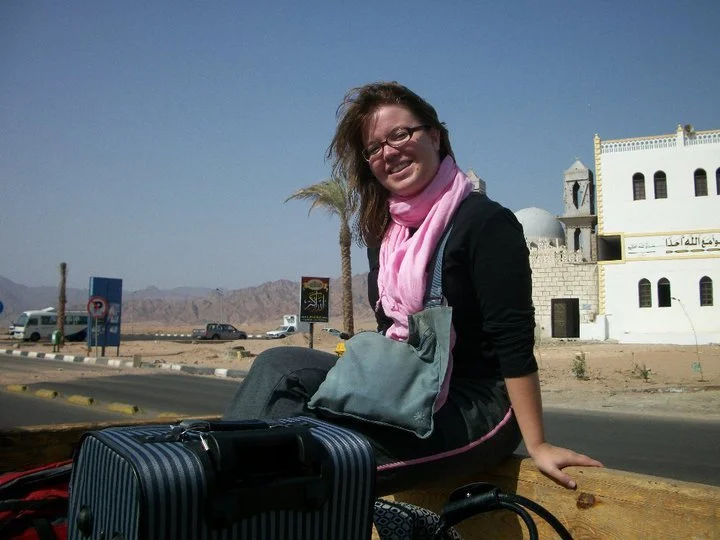
Cairo was the first place I ever lived overseas, and it will always be an important part of my story. I had great friends and an exciting life. Everything felt new, and I was having the adventure I had dreamed about.
But I also had many moments of feeling unsafe as a young, single woman.
I had several terrible experiences with male taxi drivers, to the point that I stopped wanting to take taxis by myself at night. I would only take one with friends and avoided going out alone.
I also grew resentful of having to dress modestly while simultaneously experiencing consistent harassment from men. Eventually, I knew I couldn't stay beyond my two-year contract.
I was also living in Egypt during the Egyptian Revolution, which was another factor in my decision not to extend my contract.
I want to acknowledge that this was from 2010–2012. I don't know what it is like to live in Cairo today as a woman, and I hope that many things have changed since I lived there.
But at the time, feeling safe and comfortable in my everyday life was a major factor in my decision to leave.
I've learned that I never want to reach the point where I feel resentful of the place I'm living. When that happens, it can become difficult to appreciate all of the good things about a place because you're constantly focused on what you don't like.
For me, that's a sign that something needs to change.
When You’re Staying Because You’re Afraid to Leave
I've learned that there's a big difference between thinking, “I want to stay” and “I'm afraid to leave.”
The problem is that sometimes those feelings are incredibly similar.
It's easy to get comfortable with a routine. You know your job, you know how things work, you know the city, you like your apartment, you have your friends. Sometimes, it feels easier to stay simply because the process of leaving feels so overwhelming. I have definitely let this fear take over.
First of all, it's scary to search and apply for new jobs. I'm guilty of feeling like I'm not good enough if I don't get an interview somewhere, or sometimes being too nervous to even apply for a job at a great school. The whole process can be an emotional rollercoaster.
I've also had to resign before I have a job lined up each time I've left a country. This is incredibly scary and requires an incredible leap of faith. Sometimes, it's easier to stay than to face the uncertainty of not knowing where you'll be living next.
And then, once you have a job, there's the whole process of applying for a work visa, which is usually incredibly tedious. Then comes packing up your apartment: What will you sell? What will you take with you? How will you say goodbye to your colleagues, students, and friends?
All of it is overwhelming.
There's a reason people say they fear change. I understand why that's true.
But I've also learned that I thrive on change. Change is what has pushed me to grow, become more independent, and experience things I never would have experienced otherwise.
One of my favorite sayings is, “If nothing changes, nothing changes.”
So when I find myself feeling stuck, I have to ask: Am I truly happy here, or am I staying because I'm afraid to leave?
When You Keep Thinking About What’s Next
Maybe you don't feel like anything is wrong. You're pretty content with where you are.
But then, thoughts start creeping in:
What would it be like to live there? What would my life look like somewhere else? What would happen if I applied for that job?
I'm not saying that any of these thoughts are bad.
I'm a serial daydreamer, and I love thinking about and learning what it's like to live in different countries. Daydreaming about another life can be fun. Sometimes, it's simply a fantasy.
For example, I've definitely dreamed about what it would be like to live in Paris. But I know that, for multiple reasons, that's a fantasy for me.
The question is: Is this just a fantasy, or is it a genuine desire for change?
If the same thoughts keep coming back again and again, I think it's worth asking yourself why. Maybe your intuition is trying to tell you something.
That doesn't mean you need to immediately quit your job, sell your house, and move across the world. But sometimes our recurring questions are worth listening to.
It's okay to daydream about what could be. Just don't automatically dismiss the thoughts that keep coming back.
When You've Given it a Fair Chance
Not every difficult season means it's time to leave.
I've lived abroad long enough to know that every country has difficult periods. Sometimes you have a terrible week, or even a terrible year, and you want to pack everything up and go home. That doesn't necessarily mean it's time to move on.
I think it's important to ask yourself: Have I actually given this place a fair chance? Or am I reacting to a difficult moment?
Moving is a huge decision, and I don't want to encourage anyone to make it impulsively. Sometimes you need to adjust. Sometimes you need a vacation. Sometimes you need a conversation with your boss. Sometimes you simply need to give yourself time.
This is especially true when you’ve moved somewhere new. It takes a long time to adjust and get used to how things work. Even the simple act of going to a bank can be tedious in many different countries. But that doesn’t mean you should pack up and leave.
But if you've given it time, tried to make things better, and you're still consistently feeling like something isn't right, that's different.
A bad week isn't necessarily a sign to leave. A pattern might be.
When You’ve Stopped Growing
This is a big one for me. Professionally, I'm always looking for ways to learn new things and improve my theatre teaching practice. Personally, I think about whether I'm becoming the person I want to be.
When I'm being challenged and feel like I'm growing, I feel fulfilled. It makes me want to stay at my current job and live in my current city. When that growth starts to stagnate, I start wanting something new.
I'm not saying that I need to be constantly challenged every single day. Honestly, that sounds exhausting. I want a balance: comfort and excitement. A routine and new experiences. Stability and growth. And growth doesn't necessarily mean making more money or getting promoted.
I know that I want to be a classroom teacher. I don't have a goal of moving into administration. But that doesn't mean I want to stop growing professionally. I can continue developing my knowledge, exploring new teaching methods, and improving my pedagogy.
The same is true outside of work.
If I feel like I've learned everything I wanted to learn from a particular job, or I've explored everything I wanted to explore in a city, I know it's time to start thinking about what's next.
And sometimes, outgrowing something is actually a sign that it worked. You did the thing you wanted to do. You learned what you wanted to learn. You became the person you needed to become. That's exciting! But now, what's next?
You Don’t Have to Know What’s Next
You don't always have to have the next country picked out.
You don't need another job offer.
You don't need to know exactly what your life will look like.
Sometimes you just know that you aren't meant to stay where you are forever.
And maybe the courage isn't in knowing exactly where you're going.
Maybe it's in admitting that you're ready to go.
I've lived in four countries, and every time I've moved, I've had a different reason. Sometimes I was looking for professional growth. Sometimes I wanted a different lifestyle. Sometimes I simply knew that I'd reached the end of a chapter.
I've learned that moving on doesn't mean the place wasn't good enough. It doesn't mean I failed. And it certainly doesn't mean I didn't love it.
Sometimes it simply means I've changed.
And that's okay.
Until next time - keep saying yes to the adventure.
