How to Get an International Teaching Job
(From Someone Who’s Done It for 15 Years)
If you’ve ever thought about teaching abroad, you’ve probably imagined the travel, the lifestyle, and the adventure.
What most people don’t see is how complicated and unpredictable the process of getting there can be.
I honestly fell into international teaching with a bit of good luck. As I mentioned in my first blog post, I didn’t even know teaching abroad existed or that it was something I could do.
By chance, one of my professors mentioned the overseas teaching fair at the University of Northern Iowa (this happens every year, usually in December/January). I signed up to go, but I really had no idea what I was getting myself into.
What People Think vs Reality
Myth: “You just apply online to exciting places like Paris or Rome and get hired.”
Reality: Recruiting is competitive, seasonal, and strategic. Also, many “dream destinations” have visa requirements that can limit who is eligible to work there, or the salary isn’t always enough to realistically live on.
Before attending the UNI job fair, I could see what Theatre teaching jobs were available so I could start planning. If I remember correctly, there were only 4 or 5 jobs that I was qualified for.
(And even that’s not totally true! I was still finishing my student teaching at the time, so I didn’t technically have my degree or teaching license yet.)
I don’t remember exactly where those jobs were, but I do distinctly remember feeling incredibly overwhelmed and underqualified.

Me and my husband in front of the school we worked at in Beijing, China.
The job fair usually starts with a round robin where you can speak with recruiters from different schools. You drop off your CV and, if there’s interest on both sides, you can schedule an interview. (This process has changed a bit. Now interviews are often scheduled in advance, and sometimes even happen before the fair.)
One thing that might surprise you: interviews are often held in hotel rooms. This is completely normal. Most job fairs take place in hotels, so schools use quieter spaces for interviews.
I walked around with a CV that had no real teaching experience on it - just my anticipated graduation date. I wasn’t a particularly strong candidate, to say the least.
But somehow, as I mentioned in my first post, I did secure a job in Cairo, Egypt.
I was incredibly fortunate to get that job because it truly is a competitive process.
Another myth I hear a lot is that if you’re a native English speaker, you can easily get a job abroad without credentials. In reality, you need an education degree and a teaching license, and most schools prefer 2 - 5 years of experience.
Where to Actually Find Jobs
There are several recruiting platforms, and most of them require a fee to join.
I’ve used Search Associates most frequently. To join, you need to upload your credentials and have references complete reports about you. This all happens before you’re even accepted onto the platform.
From there, you can browse job postings and see upcoming international job fairs. I found my job in Beijing after attending a fair in Bangkok (where I was living at the time).
During and after COVID, many fairs moved online. I actually found my current job in Chennai through virtual interviews and didn’t attend a fair in person.
Common locations for job fairs include Bangkok, London, Hong Kong, Sydney, Los Angeles, and Dubai. Schools from around the world attend these fairs, although some are more region-specific (for example, Hong Kong tends to focus more on schools in China).
Another benefit of using these platforms is that both you and the schools are vetted. When you’re just starting out, that added layer of security really matters. That said, each platform is different, and joining one doesn’t guarantee you’ll get a job - it simply means you meet their requirements.
Other platforms include:
– Schrole
– GSR
I haven’t personally used these, but I know many teachers who have.
You can also find jobs through websites like:
– tes.co.uk (mostly British international schools)
– teachaway.com (often for English teaching roles)
– eslcafe.com (ESL-focused)
– teacherhorizons.com (I’ve had good experiences with them, though I haven’t secured a job through them yet)
The Hiring Season
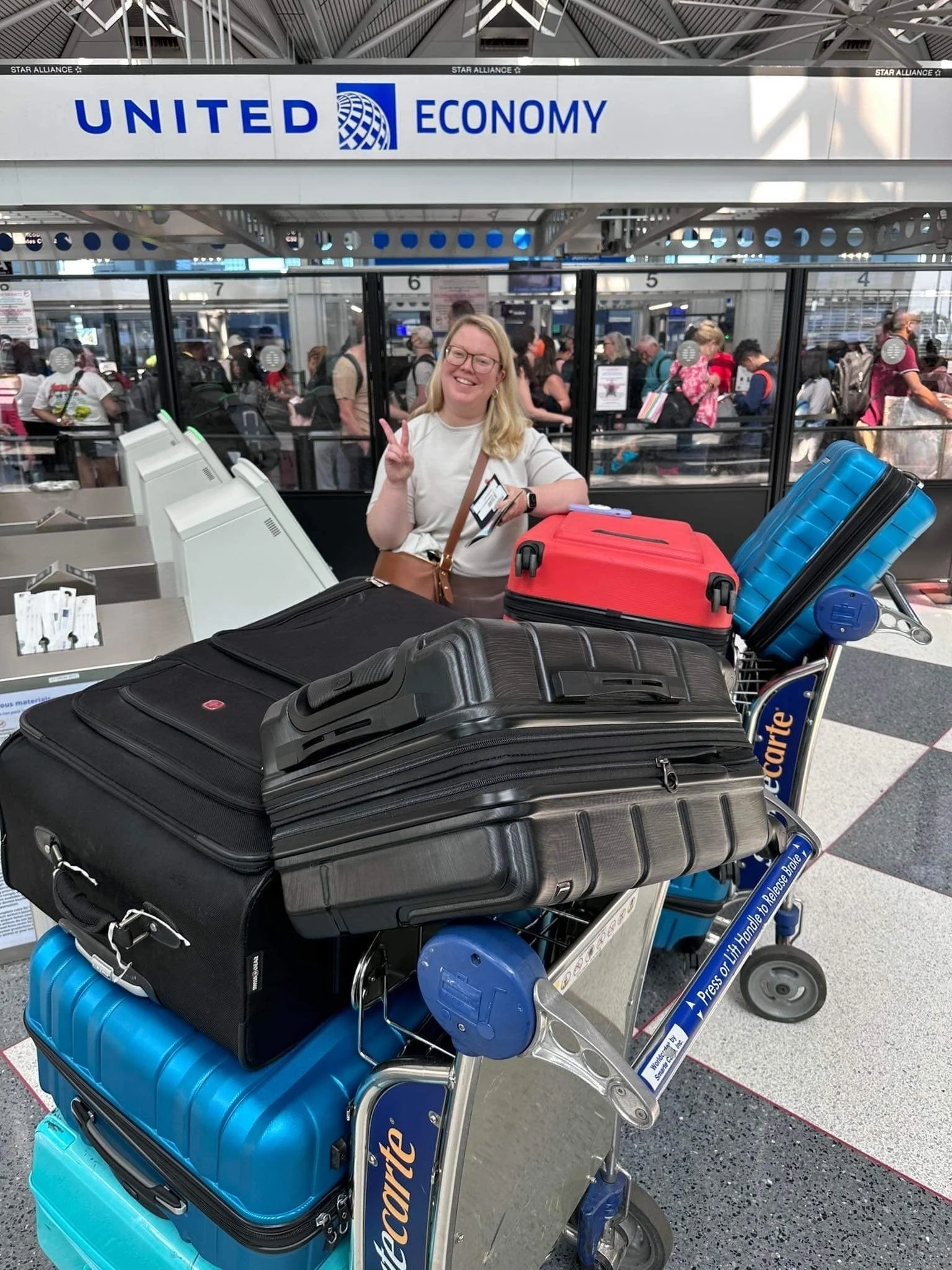
What I usually look like at an airport with a ton of checked bags moving to a new country.
One of the more difficult parts of teaching abroad is timing.
You’re usually asked to decide whether you’re staying at your current school between October and December, which means you’re often making that decision before you’ve secured your next job. It can feel like a huge leap of faith.
Contracts are typically two years to start, with the option to extend if it’s a good fit for both you and the school.
Peak hiring season usually runs from October through February (sometimes March). There’s also late hiring from February all the way to June, so it’s important to stay open-minded. Some regions, like Europe, tend to follow a slightly later timeline, while admin roles are often posted earlier.
The earliest I’ve secured a job was November, but I’ve also accepted jobs as late as April, so don’t panic!
What Schools Are Really Looking For
I’m not an expert in what every school is looking for - otherwise I’d probably have to fight off thousands of job offers!
But one thing that surprised me early on is this:
Finding an international teaching job isn’t just about being a good teacher. It’s about being someone a school wants in their community. As I mentioned in my last post, these communities are close-knit, so it’s important to find a school that feels like the right fit for your personality.
Flexibility and adaptability matter a lot. Having an international mindset shows that you’re able to adjust to new environments, cultures, and challenges.
And sometimes, it simply comes down to fit. Not every school will be right for you, and you won’t be right for every school either. That’s okay.
Stay open-minded, but don’t settle.
What No One Tells You About the Process

The view from my apartment window in Beijing.
It’s an emotional rollercoaster!
You start to imagine your life somewhere new: where you’d live, what your daily routine might look like, what it would feel like to build a life there. It starts to feel real.
And then… you don’t get the job.
And the cycle starts again.
My advice is to follow the jobs. If something fits, even if it’s somewhere you never imagined living, apply anyway. Some of the best opportunities come from the places you least expect.
I never saw myself moving back to China or living in southern India. If I had been too focused on a specific destination, I would have missed out on experiences that shaped both my career and my life.
Another reality: you might get ghosted, or things might move incredibly fast. There’s also no single standard for hiring. Some schools have just one or two interviews, while others run multiple rounds with different people. During a job fair, I’ve been offered positions after only one 30-minute interview. For other positions, I’ve had several rounds of interviews with various people from the school organization.
One of the more frustrating parts of the process is when schools don’t respond, or disappear after an interview. I’ve heard stories of candidates getting very far in the process, only to hear nothing at the end. I hope that’s rare, but it does happen.

Travel essentials: passports & margaritas.
How to Get Started
If you’re still here, hopefully I haven’t scared you off, and you’re feeling curious about what this path could look like for you!
Where to start:
– Get qualified (complete your degree and teaching license)
– Sign up for platforms (be mindful of fees)
– Prepare your CV and references (I personally love using Canva for this)
– Start applying early (jobs often appear from October)
– Stay flexible and open-minded
It’s not always easy, but it’s worth it.
Teaching abroad can completely change your life - but getting there isn’t always straightforward.
If you’re in the middle of the process, or just starting to think about it, you’re not behind - you’re just at the beginning.
Until next time - keep saying yes to the adventure.
