What It’s Really Like Teaching Abroad: The Good, The Hard & The Unexpected
15 honest years teaching overseas in four countries and five schools.
If you’ve ever wondered whether teaching abroad is really as glamorous as it looks online, this post is for you.
I want this blog to be a place where I can speak honestly about my lived experience. Everything here is based on my personal perspective after teaching internationally for 15 years in four different countries and five different schools.
The short version? Teaching abroad has been one of the best decisions of my life. But it has also been challenging, emotional, and far more complex than many people realize.
The Beautiful Parts of Teaching Abroad
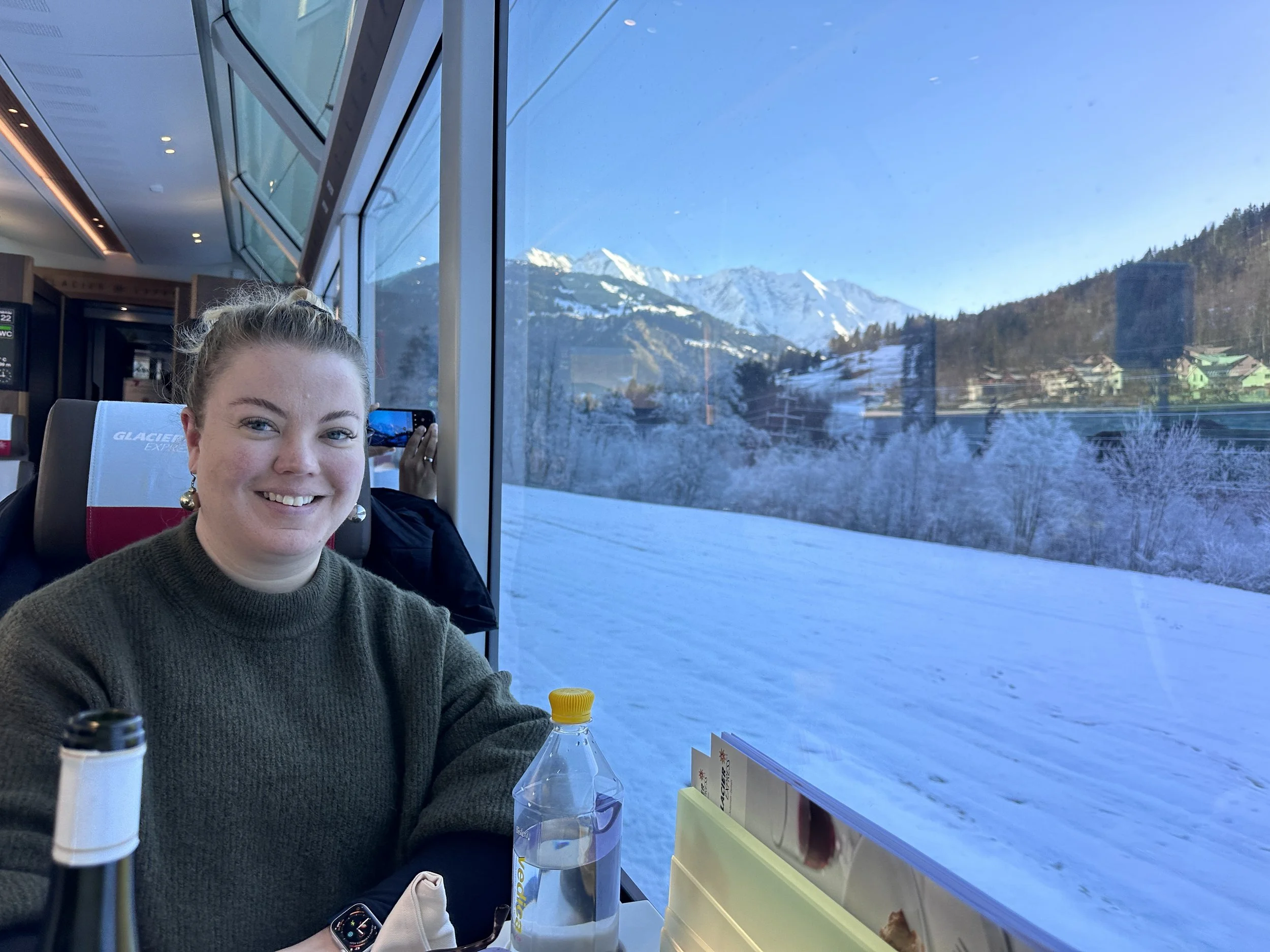
On the Glacier Express from Zurich to Zermatt, Switzerland.
First of all, teaching abroad is a wonderful opportunity.
I truly believe that the difficult moments I’ve faced have been worth it in the long run. I feel incredibly fortunate that I took a chance all those years ago and am still living this life today.
Living in different countries has opened my eyes to many ways of life and made me a more compassionate, flexible, and understanding person. Experiencing cultures different from my own has sometimes been uncomfortable, but it has also made life richer.
Teaching students from diverse backgrounds is one of the greatest gifts of international education. I’ve had students from all over the world learning side by side, building friendships, and growing together. It is something truly special to witness, especially as a Theatre teacher. It’s exciting when students bring a range of perspectives and life experiences to their work in class and on stage.
And then there’s the travel.
Depending on where you live, you may be able to visit a new country over a long weekend. That kind of access can completely change how you see the world.
The Hard Truth: It Is Still a Real Job
Teaching abroad is not a permanent vacation.
I’ve been fortunate enough to work with some of the most brilliant and passionate educators in the world. But those environments often come with high expectations and high pressure.
Some students may come from highly connected or influential families. You still communicate with parents, but those parents may be diplomats, executives, public figures, or leaders in their fields.
Like any school, there are long hours, emotional demands, difficult situations, and workplace stress. In some cases, those pressures can feel even more intense abroad. It is common to be expected to chaperone weeklong trips, and to take students on excursions to different countries. There is a large sense of responsibility in these situations, alongside demands of running after school clubs and some weekend events.
Constant Transition and Saying Goodbye

Dinner with my closest girlfriends in Bangkok.
One of the hardest parts of international life is how often everything changes.
At the end of almost every school year, people leave. Students move on. Teachers accept jobs in new countries. Entire friendship groups can look different in a matter of weeks.
Students are constantly saying goodbye to close friends, but teachers feel it too.
Many international educators become especially close because we are living far from home and away from family. There’s a shared understanding in that. Then, just when life feels settled, someone announces they’re leaving.
I’ve gone through it myself more than once. Leaving a school I loved, rebuilding a community, and starting over somewhere completely new. There is excitement in that kind of change, but there can also be real exhaustion.
What has helped me most is learning to see these endings as part of the gift, not just the loss.
I’m grateful for every friendship this life has brought me. And one of the beautiful things about international friendships is that even after time and distance, you often pick up right where you left off.
Sometimes a goodbye simply becomes a reason to book a flight and meet again somewhere new! Two of my best friends from Bangkok moved to Shanghai when I was living in Beijing - they now live in Singapore while I’m in Chennai. We have found numerous opportunities to meet up in various places over the years. In October, we were able to meet in Koh Samui, Thailand, for a few days. So, it’s never truly a goodbye when you have a plan to meet up again soon!
Can You Save Money Teaching Abroad?
One reason many people consider international teaching is lifestyle and finances.
Personally, I’ve often had more travel opportunities, lower daily expenses, and a greater ability to save money than I likely would have had teaching in the U.S.
Of course, this depends entirely on the country, school package, housing allowance, taxes, and cost of living.
There’s a common saying in the international teaching world - you can usually have two out of these three things:
A great city to live in
A great school to work at
Great pay
In my experience, there is truth to that.
If high savings is your top priority, Europe is not always the easiest region. If lifestyle matters most, you may prioritize differently.
At some schools, I’ve been given a housing allowance and have paid my own utilities. I have sometimes chosen to have a slightly more expensive apartment and pay some money out of pocket as well. In other schools, I’ve been given a house to live in and haven’t paid any utilities. When I first started teaching abroad, I was basically living off my salary, paying off student loans, and traveling without saving much money. So, it’s really all about what your priorities are and what comforts you’re willing to live without.
Who Thrives Living Abroad?
In my experience, the people who thrive abroad long-term are:
Curious
Independent
Adaptable
Emotionally resilient
Open to discomfort and growth
People who arrive with rigid expectations of what life abroad should be often struggle the most.
Flexibility matters more than perfection. I have had an idea about what living life in Egypt, China, Thailand, or India could be like. But I’ve been wrong almost every time! In each place, things have surprised me. What I thought was going to be very difficult have turned out to be easy, and vice versa. It’s so important to keep an open mind.
What No One Tells You About Life Abroad

By the Seine River in Paris, France.
There are also realities people rarely mention.
Banking and Finances Can Be Frustrating
Every country has different systems for banking, transfers, taxes, accounts, and paperwork. Tasks that seem simple at home can become surprisingly complicated.
Friendships Move Fast
Because many people know their time together may be limited, friendships often deepen quickly. You may open up faster than you normally would.
You Feel at Home Everywhere and Nowhere
After enough moves, identity becomes more fluid.
I’ve learned that I need very few material things to feel comfortable. I have made many moves to new countries with only two suitcases to my name, and that’s truly all I’ve needed. What matters most is who I’m with and how willing I am to adapt.
Reverse Culture Shock Is Real
One of the most unexpected challenges can be returning home.
I remember going back to Wisconsin for the first time at Christmas after moving to Cairo. I expected endless questions about my new life, my travels, and what everything had been like.
Some people asked.
Many didn’t.
I don’t say that critically - I’m still close with those friends. But I learned that some experiences are difficult to explain to people who haven’t lived them.
And that’s okay, too.
On a lighter note, I love overhearing conversations when I’m back in the U.S. It feels so strange to suddenly understand everyone around me again.
So if you ever see me sitting a little too close at a restaurant . . . I’m probably listening to your tea. ☕
Is Teaching Abroad Worth It?

Sitting by the West Lake in Hangzhou, China.
For me, absolutely yes.
Living and teaching abroad has given me far more than passport stamps or a collection of travel stories. It has stretched me, humbled me, surprised me, and introduced me to friendships across the world that I never would have found otherwise.
There were lonely seasons. There were exhausting ones, too.
But there was also growth, laughter, reinvention, and a life I never could have mapped out in advance.
So if you’re considering teaching abroad, know that it won’t always be easy. Sometimes it will be messy, uncomfortable, and deeply inconvenient.
It may also change you in all the right ways.
Until next time - keep saying yes to the adventure.
