How Living Abroad Changes Your Identity
Introduction
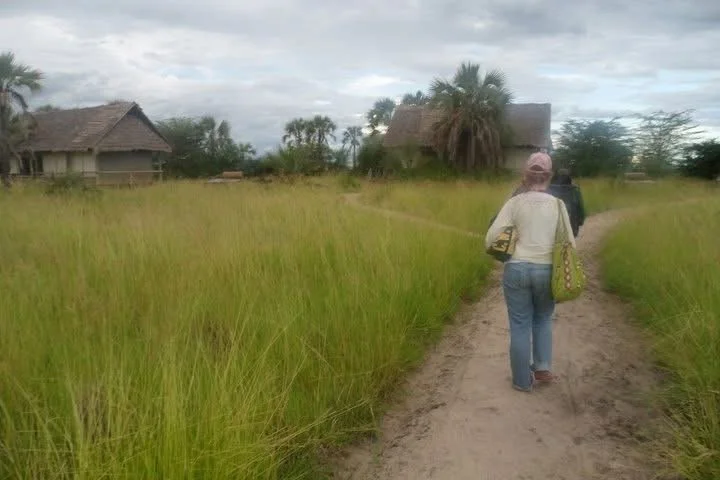
On safari in Tanzania.
I remember one summer moment when I returned to the US to visit friends and family after living in China. I had probably been abroad for around three years at that point. My best friends from college and I went out to eat at a fairly nice Italian restaurant for dinner - the kind where you get a salad bar with your main course.
We all ordered our meals and everyone, except for one person, got the dinner course with the salad bar included. I believe the other person had ordered an appetizer to start with. Without thinking, I got up, went to the salad bar, and filled up my plate.
I came back to the table and started eating, but then realized… nobody else had gotten up yet.
Then it hit me: they were waiting for the friend who ordered the appetizer to get her dish before going to the salad bar.
This sounds like such a small thing, but I suddenly remembered the social etiquette rules of my home country. In China (and in many other countries), people often begin eating as dishes arrive at the table. Meals rarely come out all at once, so you simply start while the food is hot.
I realized how rude it looked in the US to begin eating before everyone had their food. Somewhere along the way, my habits and instincts had quietly changed without me even realizing it.
I expected living abroad to change where I lived. I didn’t expect it to change who I was.
Home Stops Feeling Like One Place
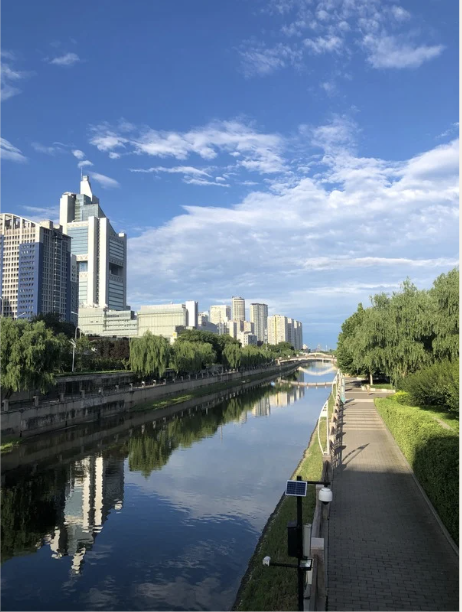
My favorite walking path in Beijing.
For 22 years, I knew exactly where home was.
Even after moving away to college, my bedroom at my parents’ house stayed mostly the same. Home was fixed, stable, and uncomplicated.
Then I moved abroad.
I arrived with only one (overweight) suitcase and moved into my first apartment alone. Everything felt unfamiliar. The mattress was hard. The toilet and shower worked differently. I had to learn how to use a gas stove. Even grocery shopping felt overwhelming.
For a long time, everything felt slightly surreal.
But after 15 years abroad, four countries, five cities, and more apartments than I can count, I’ve become strangely comfortable with unfamiliarity. I’ve learned that I don’t need very much to feel at home.
And somewhere along the way, “home” stopped meaning one singular place.
I lived in Bangkok for four years and absolutely loved it. I’ve gone back several times since leaving, and every time I land there, something in me relaxes. Getting into one of Bangkok’s brightly colored taxis and hearing the Thai language feels instantly familiar in a way I can’t fully explain.
I’ve realized that I now carry emotional connections to multiple cities around the world. Certain streets, restaurants, bars, walking paths, skylines, smells, and routines feel like pieces of my life scattered across different countries.
One of the strangest things I feel nostalgic for is a walking path my husband and I used to take in Beijing. It had beautiful views of the skyline, bridges lit up at night, flowers in the spring, and a river running alongside it.
I don’t miss Beijing every day.
But sometimes I miss that exact path so much it physically hurts.
Even in winter, bundled up in layers, we still walked there constantly. I loved watching groups gather in the evenings: square dancing, opera singing, even sword dancing classes. No matter the time of day, something joyful and quintessentially Chinese was always happening there.
I’ve also noticed that the longer I live abroad, the stranger the US sometimes feels to me.
It feels odd now to remember a time when I drove everywhere, owned a car, and considered that lifestyle normal. Even now when I visit, my parents try to insist that I take the car when I’m only going a few blocks and am fully capable of walking. But then I remember high school, when I used to drive to my job at Dairy Queen even though it was only a five-minute walk from my house.
When I visit, there are things I love deeply: summers with family, seeing old friends, certain foods and traditions. But there are also things that now feel distant to me.
The pace of life. The pressure to constantly work. The cost of living. The feeling that people are exhausted all the time.
Now, one of my favorite things to do when I visit the US is wander through grocery stores. I can’t believe the cereal flavors they come up with, or how many varieties of Oreos exist now! Everything feels enormous: the stores themselves, the fluorescent lights, the packaging, even the portion sizes at restaurants.
At the beginning of each summer, I can never finish an American-sized meal. By the end of the summer, I usually can. That’s how I know I’ve gained a few pounds and it’s probably time to leave again, haha!
Years ago, when I first moved abroad, I constantly dreamed about going “home” to the US.
Now I find myself dreaming about where I might live next instead.
Your Identity Quietly Changes Without You Noticing
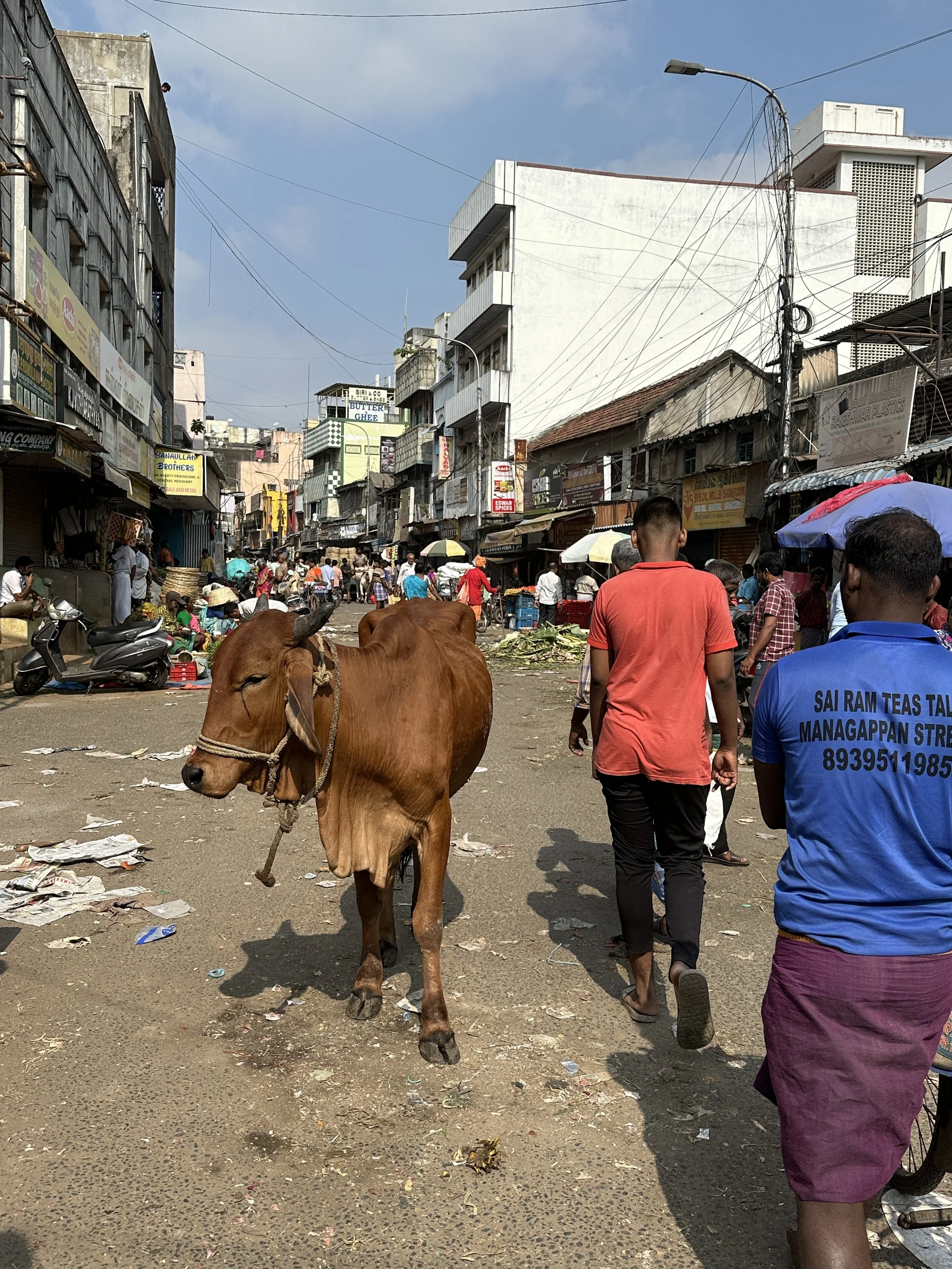
Walking through a vegetable market in Chennai.
The strangest part of living abroad long-term is realizing that your identity changes quietly.
It doesn’t happen all at once. It happens slowly, through habits, routines, and tiny moments.
One day you instinctively take your shoes off before entering a house. Another day you realize ordering groceries online has become your norm. You stop converting currencies in your head. You develop cravings for foods from places you no longer live, especially dishes from your favorite restaurants abroad.
Then one day you return “home” and realize parts of you no longer fit there quite as naturally as they once did.
One of the biggest shifts for me was realizing how much my understanding of comfort and inconvenience had changed.
I grew up in the US surrounded by convenience. If something was uncomfortable, delayed, or inconvenient, it often felt like a major frustration. Living abroad slowly changed my perspective on that.
I currently live in Chennai, where temperatures regularly climb above 100°F (40°C) with intense humidity. When I first moved here, I was shocked that many people I worked with didn’t have air conditioning in their homes. I genuinely couldn’t understand how they managed in that kind of heat.
Over time, I started noticing resilience everywhere. People adapted. Life continued.
At the same time, I also became more aware of my own privilege and how differently people experience daily life depending on circumstance. Living abroad didn’t suddenly make me understand hardship completely, but it did make me more conscious of the comforts and assumptions I had always taken for granted.
Families gathered outside in the evenings, children played cricket in narrow streets, tea stalls stayed busy, and daily life carried on despite conditions that would have once felt unbearable to me.
Living abroad didn’t make me immune to stress or frustration, but it did change my sense of what truly matters. Problems that once felt enormous to me slowly began to feel smaller. I became more patient with discomfort, uncertainty, and inconvenience in ways I never expected.
Somewhere along the way, my definition of what counted as “hard” quietly changed.
Living abroad also changed the way I think about culture in general.
When you spend enough time moving between countries, you stop assuming your way of doing things is the “normal” way. You realize there are many different ways to communicate, eat, work, celebrate, raise children, spend time with family, and move through the world.
Living abroad didn’t just teach me about other cultures. It taught me about my own.
You Learn to Live in Transition
Living abroad forces you to become adaptable because uncertainty becomes part of everyday life.
Just when you settle into a routine, something changes.
Contracts end. Friends move away. Visas change. You move apartments. Entire countries suddenly become possibilities.
This is especially true as an international teacher. Job hunting often feels surreal because your future can completely change with one interview. One month you think you’ll stay where you are, and the next month you’re researching apartments on the other side of the world.
You also constantly have to learn new systems.
Every country has unfamiliar apps, banking systems, transportation systems, grocery stores, social norms, and ways of doing basic tasks. Even ordering food or calling a taxi can suddenly feel complicated again.
At first, this uncertainty feels exhausting. But over time, living abroad made me less rigid.
You eventually learn that getting stressed about things you can’t control is pointless. Plans change. Systems fail. Things rarely go exactly the way you expected. (I’m still working on this!)
And somehow, life continues anyway.
I remember when my husband and I were taking the train from Vienna to Munich. Suddenly, about an hour outside the city, there was an announcement in German that caused everyone around us to become visibly frustrated.
We quickly realized the railroad workers were going on strike and the train would stop at the next station. Everyone had to get off and figure out another way to Munich.
At first, we panicked. We searched for taxis, alternative trains, anything that might work.
But through the kindness of strangers and locals, we eventually found another overcrowded train heading toward the city. People were squeezed together holding luggage, standing shoulder to shoulder.
The funny thing was that it was Oktoberfest, so despite the chaos, the mood was strangely cheerful. People laughed with friends, drank beers, and were simply excited to get to Munich.
What initially felt stressful eventually became one of our favorite travel memories.
Living abroad has taught me that some of the best experiences happen after plans completely fall apart.
Your Friendships Become Different

Two of my best friends in Beijing who came to see me in NYC.
As I’ve mentioned in previous blog posts, I’m incredibly grateful for the close friends I grew up with and the friends I met at college. Even though we often only see each other once a year, we somehow pick up right where we left off.
Living abroad deepened my appreciation for that kind of friendship.
Over the last 15 years, I’ve met close friends across four different countries. We may not speak constantly, but when we reunite, the rhythm of the friendship always comes back surprisingly quickly.
Last summer, I spent some time in New York while attending the Broadway Teacher’s Workshop. Two of my closest friends from my years living in Beijing happened to live relatively nearby: one came from New Jersey and the other traveled down from Maine.
We met for dinner and went to see Oh, Mary!, and even though it had been nearly three years since I’d last seen them, we slipped back into conversation effortlessly.
That’s one of the strange and beautiful things about friendships formed abroad. Time and distance matter less somehow. Maybe it’s because those friendships are built during such intense and transformative periods of life.
I remember feeling so grateful that they had both taken the time and energy to travel into New York just to spend an evening together.
Living abroad has given me friendships scattered across the world, but somehow those connections still feel incredibly close.
Of course, living abroad also means constantly saying goodbye.
At first, I found this incredibly difficult. Every time I moved to a new city, I found myself grieving the friendships I had left behind.
But international teachers travel often and tend to share similar holiday schedules. Over the years, I’ve reunited with friends in Singapore, Bangkok, London, and countless airport terminals in between.
People enter your life intensely and then disappear geographically just as quickly.
And somehow, many of those friendships still last.
You Stop Fully Belonging to One Place
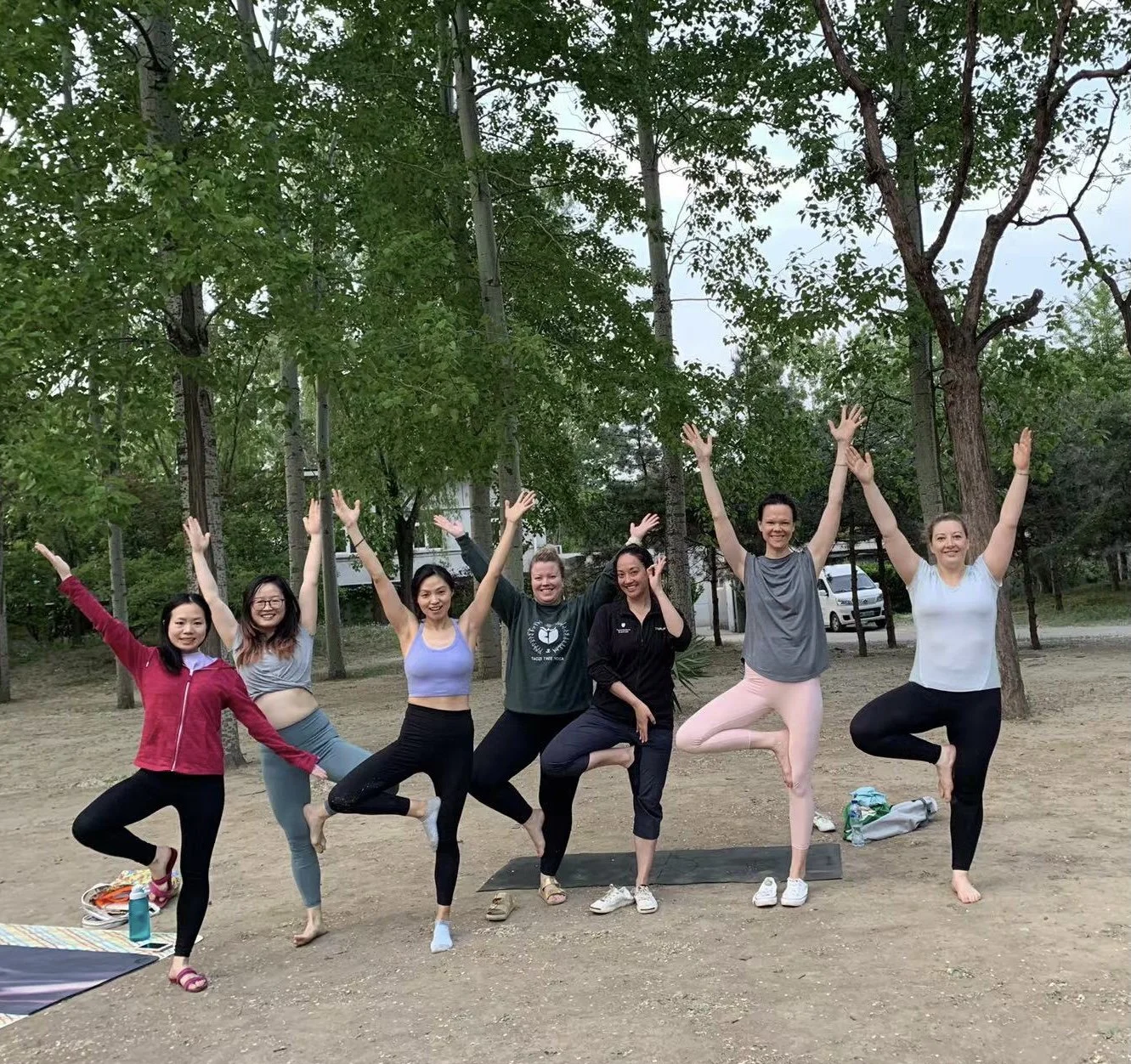
Part of my Beijing yoga community practicing in Chaoyang Park.
Sometimes I wish I could take the best parks, restaurants, bars, gyms, and yoga studios from all the places I’ve lived and combine them into one perfect city made just for me.
Because the truth is, I’ve learned to feel at home in multiple places around the world.
Even after I move away, I still carry pieces of those places with me.
One of the things my husband and I love to do is collect artwork from our travels and the places we’ve lived. Looking at the mixture of artwork from around the world always makes me smile. I love the memories attached to each piece: where we bought it, the conversation we had with the artist, the version of ourselves we were at that point in life.
I also love how living in different countries has made my identity feel more layered rather than fixed.
When I moved to Bangkok and later Beijing, yoga became a huge part of my life. I was lucky enough to find incredible yoga studios in both cities, which also helped me build community.
While living in Beijing, I even completed a 200-hour Yoga Teacher Training certification. Every weekend during one winter, I would spend twelve-hour days at the studio on top of teaching full-time during the week.
Looking back now, it remains one of my favorite memories from Beijing.
Had I never moved abroad, I’m not sure yoga would have become such an important part of my identity.
Living abroad has continually given me opportunities to discover new parts of myself.
Conclusion

In the Egyptian desert.
Maybe now, after 15 years abroad, identity no longer feels fixed to me.
It feels layered.
Part of me still exists on that walking path in Beijing.
Part of me still exists in Bangkok traffic.
Part of me still exists in coffee shops in Chennai, airport terminals, tiny apartments, and all the strange routines I’ve built across different countries.
Living abroad didn’t erase who I was.
But it stretched my identity wider than I ever expected.
And while there are moments when I miss the simplicity of having one clear definition of “home,” there’s also something beautiful about carrying pieces of the world with you wherever you go.
Until next time - keep saying yes to the adventure.
