What It’s Like Living in India as a Foreigner
I first landed in Chennai at about 2:00 AM in July, 2023, with multiple suitcases and an excitement to see where I would now be calling “home.” It’s always strange arriving somewhere new in the dark. I thought the streets would be deserted and quiet, but I was wrong.
I remember street cleaners out sweeping the roads, motorbikes whizzing past us, cows roaming the streets and chomping on grass. Restaurants were still open and buzzing with people.
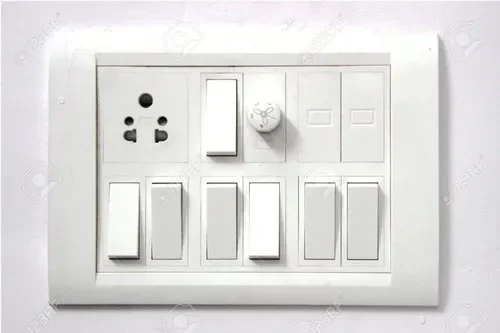
A light switch for approximately two lights.
When we arrived at our home (provided by the school), it was a sharp contrast. In preparing for our arrival, they had turned on every light, fan, and air conditioner. After traveling from the US, we were exhausted. But the kind housing team from school took us around each room and explained things like the button to turn on the water pump to fill up the water tank, how to use the stove, and where to put our trash out on the street. I was so overwhelmed that I barely remembered anything.
After they left, my husband and I had a hilarious time trying to turn off all the lights, fans, and air conditioners. The light switches in India are something else! There can be 5–10 switches for just a couple of lights, so it takes time to figure out which buttons actually do what.
I was already beginning to understand how complex, surprising, overwhelming, beautiful, and alive Chennai would be.
India Is So Much More Diverse Than I Expected
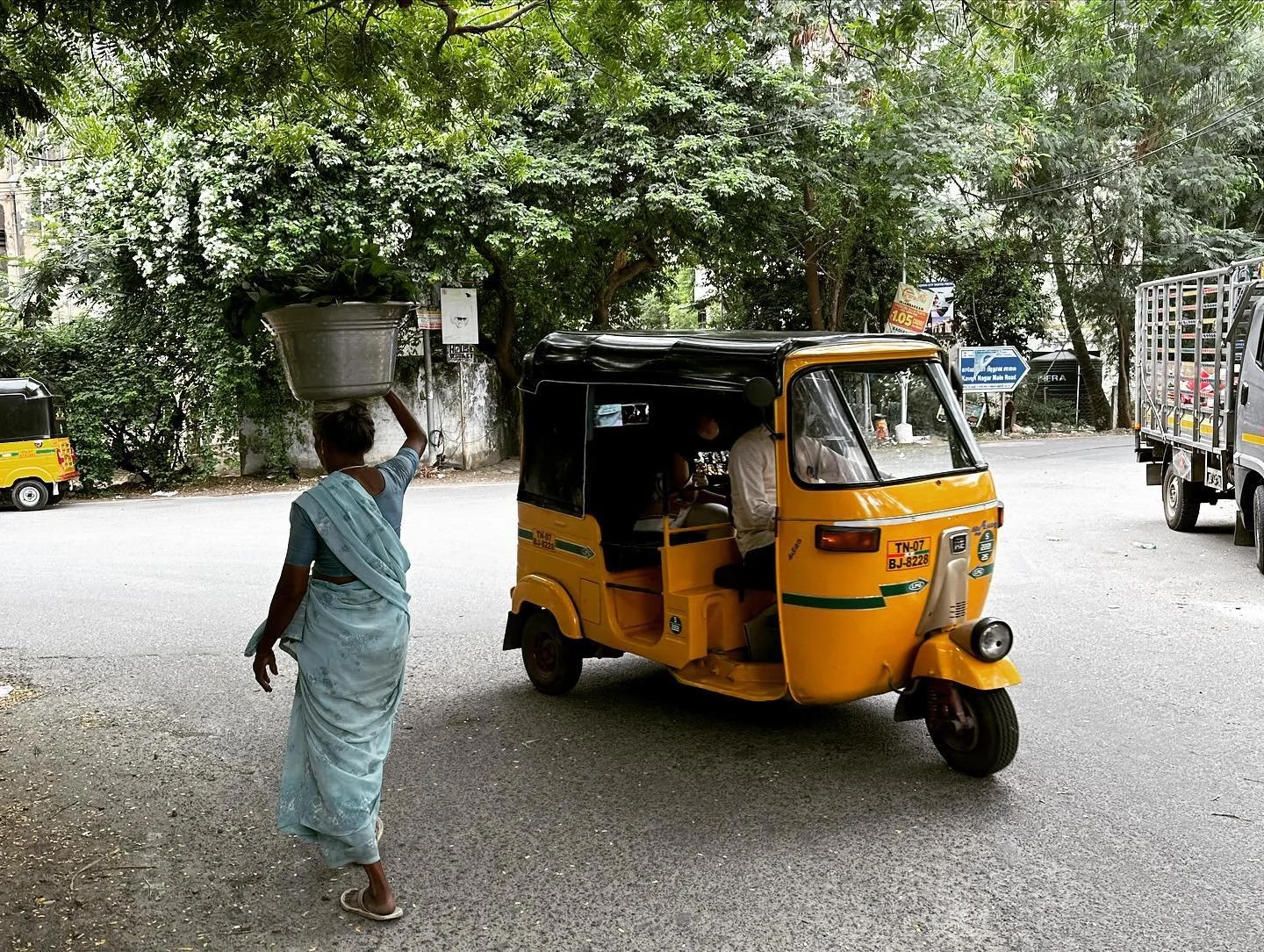
An everyday street scene.
Before moving to Chennai, I had traveled the Golden Triangle (Delhi, Agra, and Jaipur), as well as Goa. Since Northern India was my first real taste of the country, I was surprised by all the differences in the South.
Like many foreigners, my understanding of Indian food was fairly limited before moving here. I thought “Indian food” meant curries, rice, and naan. But a whole new world of cuisine opened up to me in South India: idli, dosa, sambar, chutney, filter coffee, and so much more.
I also believed that all Indians were Hindu. While Hinduism is the largest religion in India, I was surprised to find large Christian and Muslim populations in Chennai as well. Something I love about Southern India is how these religions and beliefs coexist in everyday life. Even people who aren’t Christian will wish you a “Merry Christmas,” non-Hindus celebrate Diwali, and non-Muslims show respect during Ramadan. There are also so many holidays here. I love the vibrancy and conviction with which people celebrate not only their religion, but also their connection to being Indian.
Chennai itself feels vastly different from cities like Mumbai or Delhi. Being by the sea gives it a slightly slower pace of life. People pause for chai or filter coffee breaks, even in the excruciating heat. In the early mornings and evenings, the beach comes alive with people playing cricket, walking with family, or simply enjoying the ocean breeze.
Unlike some other major Indian cities, Chennai doesn’t feel dominated by skyscrapers. While there are certainly high-rise buildings, many people still live in homes or apartment buildings that aren’t towering over the streets.
Even the clothing differs subtly across India. In Southern India, it’s common to see men wearing a veshti, a long piece of fabric wrapped around the waist and lower body. The way women drape their sarees also changes depending on the region. Small details like these reminded me how impossible it is to describe India as one singular experience.
The Sensory Experience of Living in India
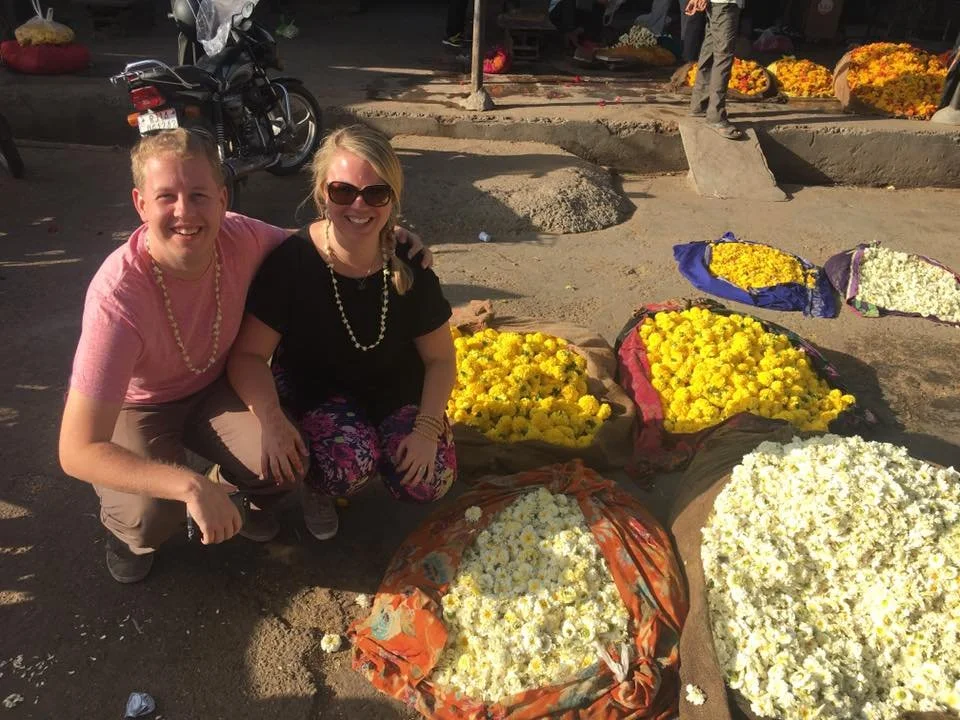
Our first trip to a flower market.
There is one almost constant sound in India that might surprise you: sweeping.
Before dawn, in the middle of the night, and anytime in between, you can hear the sound of someone sweeping outside. In the mornings, women sweep their driveways, water them down, and create beautiful kolams. These are intricate designs made from rice flour drawn on the ground outside homes. During holidays, they become elaborate and colorful works of art.
I love going on walks and seeing the different designs outside each house. There was even a kolam competition in my neighborhood once, and the artistry was astonishing.
Something else you’ll hear constantly: people talking on the phone.
As a millennial, I absolutely hate phone calls. In fact, I probably won’t answer if I don’t recognize the number. But in India, people are talking on the phone all the time. Early in the morning, late at night, while walking down the street, while driving a scooter - always talking. Honestly, I kind of love it. There’s something comforting about how connected people seem to friends and family throughout the day. For deliveries, you’ll also get a phone call asking for an OTP number. Sometimes I think delivery drivers just want another excuse to make a phone call. 😜
And then there’s the traffic.
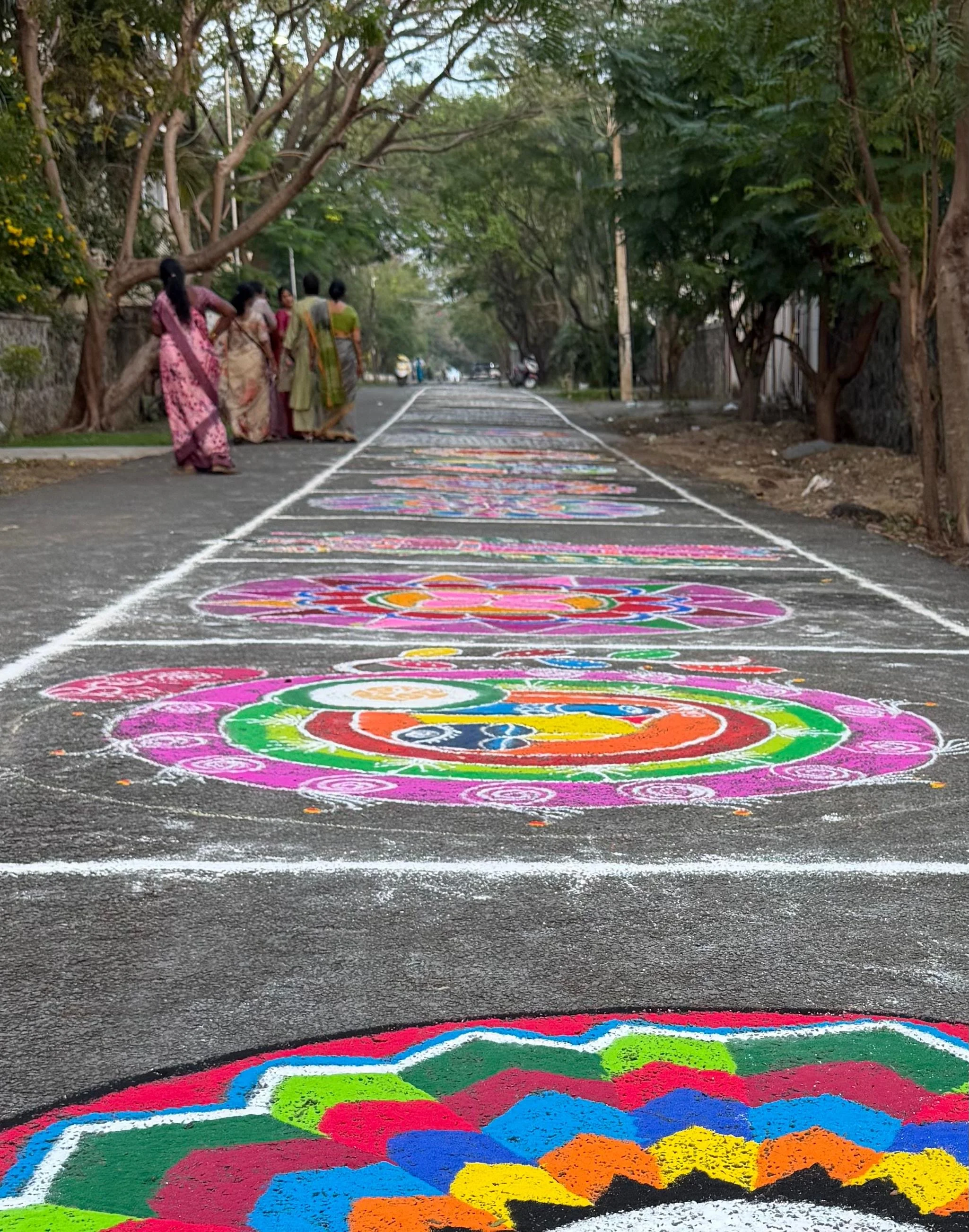
The kolam competition in my neighborhood.
Let’s just say I have never attempted to drive in India. Two lanes suddenly become four lanes. Drivers seem to communicate through secret signals invisible to foreigners. Cars and motorbikes come within inches of each other constantly. And yet, somehow, it works.
Instead of following rigid traffic rules, Indian traffic flows more like water. Wherever there’s free space on the road, a motorbike or car will somehow fill it. Of course, there’s also the constant soundtrack of honking. While it might sound aggressive to foreigners, it’s often just another form of communication between drivers.
While India may be known internationally for elephants and peacocks, Chennai’s unofficial mascot feels more like the crow. I was shocked by how loud and enormous the crows were when I first arrived. Eating outside can feel like an act of bravery because they will absolutely swoop down and steal food from your plate if given the opportunity.
But one thing I admire deeply in India is how people care for animals. From stray dogs to crows, people regularly leave food out for them. While seeing stray animals in the city can be difficult emotionally, it’s clear that many people look out for them and care about their wellbeing.
And finally: the colors.
India is one of the most visually vibrant places I’ve ever lived. Bright colors dominate the streets. Women wear stunning sarees not only for celebrations, but also in everyday life - riding on scooters, grocery shopping, cleaning, doing ordinary daily tasks with extraordinary elegance. I’ve worn a saree only a handful of times, and I can barely walk in one!
Flower markets overflow with marigolds and jasmine. Fruit stands spill onto sidewalks in bright piles of oranges, bananas, and mangoes. Many women wear jasmine flowers in their hair, adding another layer of fragrance to the already sensory-rich streets.
Things That Were Hard to Adjust To
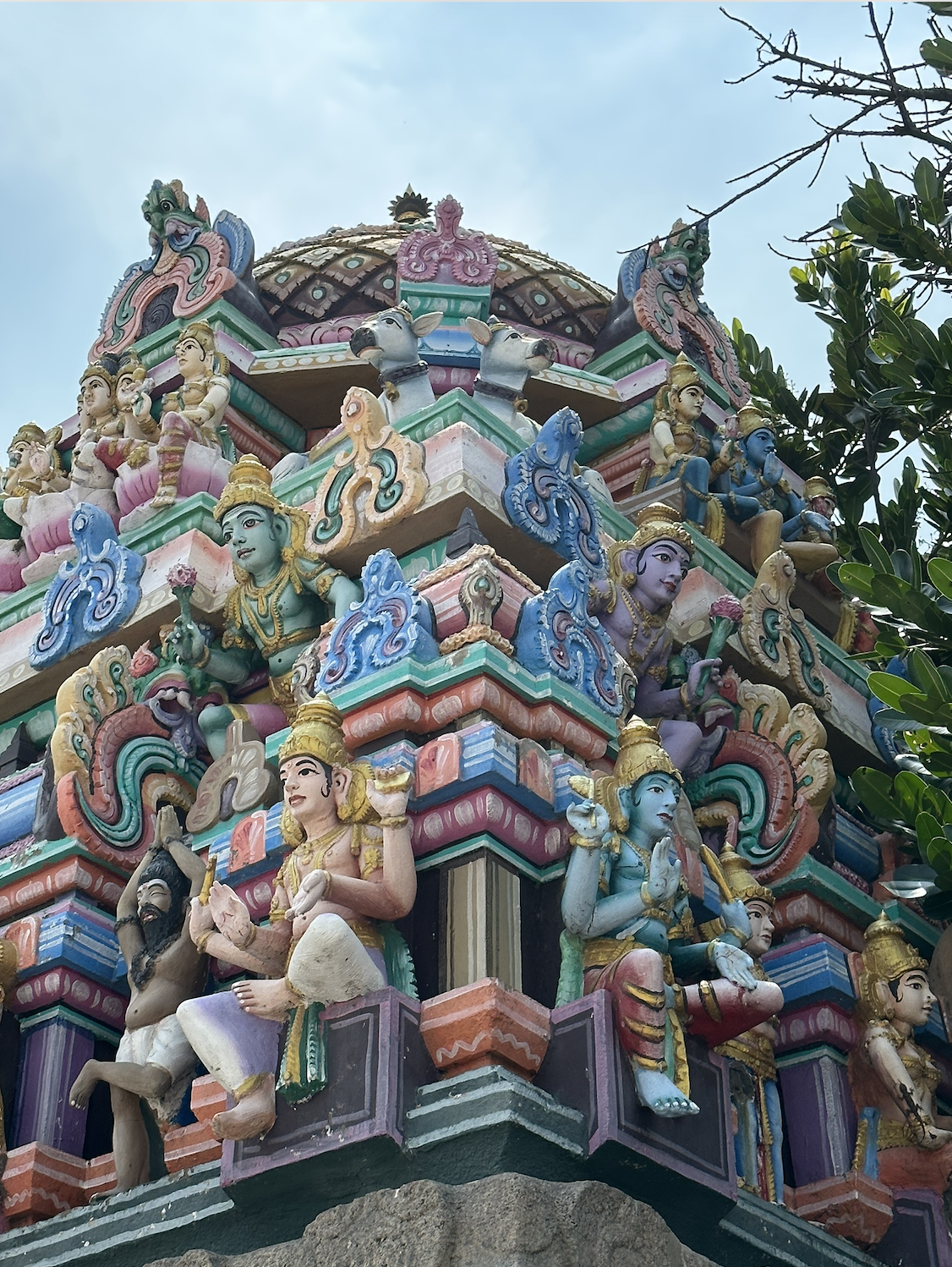
Southern Indian Hindu Temples are beautifully and intricately designed.
As much as I enjoy living here, there are of course things that I still find difficult.
India can be overwhelming. The heat and humidity, the crowds, the smells, the sounds - it’s a lot to process at first. Some days it feels exhilarating, and other days it feels exhausting.
Even after several years, traffic can still stress me out. Narrow roads, constant honking, and the unpredictability of driving conditions become even more intense during monsoon season. Chennai’s monsoons are no joke. There has been a cyclone every year I’ve lived here, and our house even flooded during our first year. During heavy rains, traffic can come to a complete standstill because roads flood so quickly.
India is also wonderfully unpredictable.
Something that should take ten minutes - like using an ATM or completing a simple errand - can unexpectedly turn into an all-day task. ATM machines might be out of cash. Systems might suddenly stop working. Plans change constantly.
Living in India has forced me to become more flexible and patient.
I’ve lived abroad for over fifteen years, so I’m used to standing out. But in India, being foreign can sometimes feel overwhelming because people openly stare or ask for photos. I know it rarely comes from a bad place - people are simply curious - but there are moments when I wish I could blend into the crowd and go unnoticed. Chennai is actually one of the places where I feel least stared at in India. But when traveling around the country, it’s a different story. Even at places as breathtaking as the Taj Mahal, people were staring at me and asking for pictures. Sometimes I wonder who the real tourist attraction is, and how many random households in India have a photo with me on the wall. 😜
One of the biggest lessons India has taught me is patience. I’ve learned to take a breath and trust the process. Things often don’t happen according to my timeline, and I’m still adjusting to that reality.
But there’s also something freeing about letting go a little and believing things will somehow work themselves out.
The Things That I Unexpectedly Fell in Love With
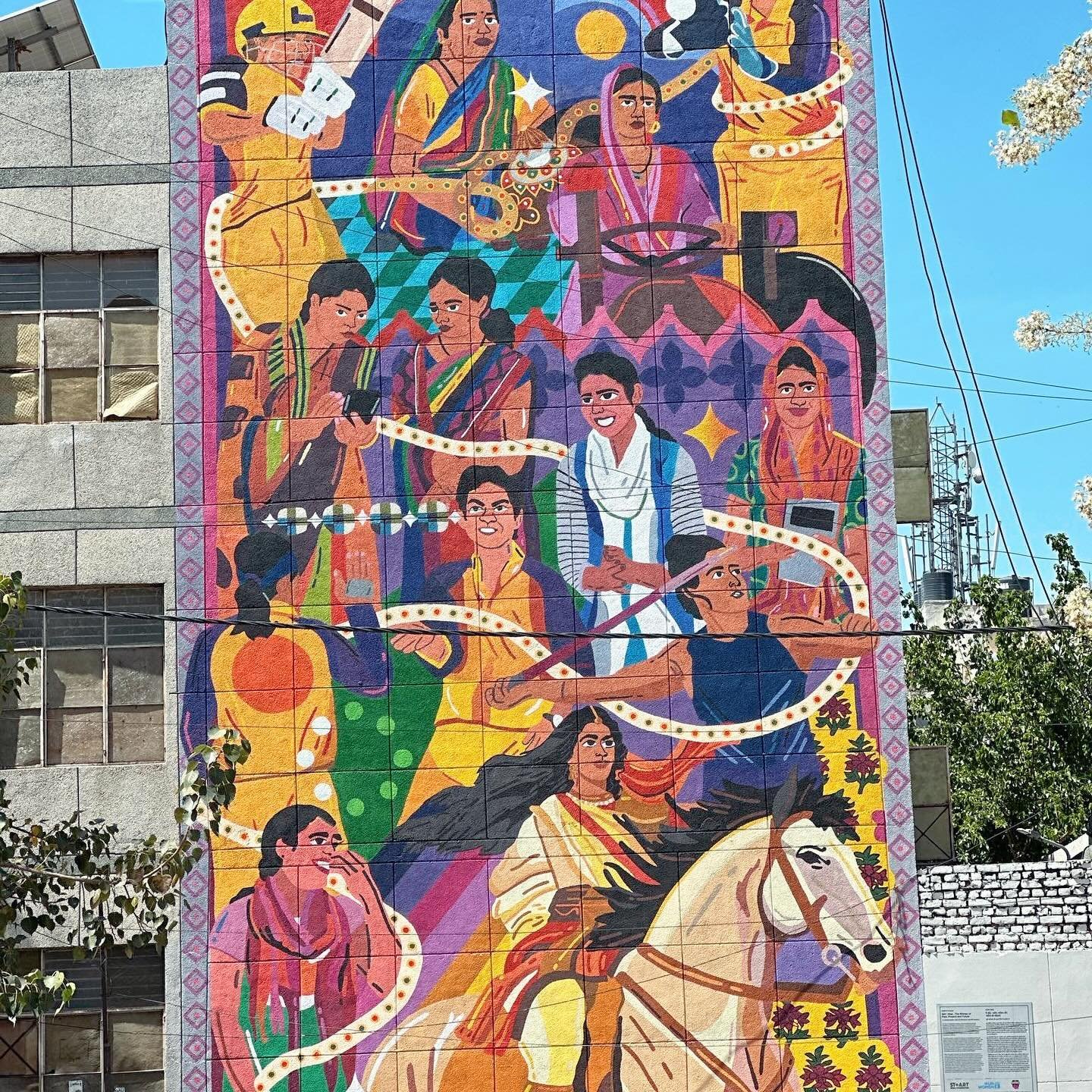
Beautiful street art in Delhi.
Moustaches in India are practically an art form.
Almost every man has one, and many wear them with enormous pride. In Rajasthan especially, the moustaches are spectacular - dramatic, expressive, and carefully styled. In India, the moustache reigns supreme.
I also didn’t expect to find so much beautiful street art.
There’s an entire stretch of road in Chennai covered in murals of different birds. Whole sides of buildings are transformed into colorful works of art. Sometimes these murals appear in the most unexpected places, and they constantly remind me of the creativity and beauty woven into everyday life here.
One of the biggest differences I’ve noticed living in India is how connected life feels.
In many Western countries, life often happens behind closed doors. In India, life spills into the streets. People stop to talk. Families gather outside in the evenings. Tea stalls stay busy late into the night. Neighbors know one another. Children play cricket in the street. There’s a sense of shared daily life that I’ve really come to appreciate.
And finally, the kindness.
Indians are genuinely some of the kindest and most welcoming people I’ve ever met. Strangers regularly go out of their way to help one another.
When my parents visited me, we spent time walking through Lodhi Gardens in Delhi. My mom was struggling to walk up some stairs, and multiple strangers immediately stopped to offer her a hand. Young people, older people - everyone seemed genuinely concerned and eager to help.
They asked where my parents were from, whether they were enjoying India, and if they needed anything. Watching complete strangers show that kind of warmth and care honestly made me emotional.
That kind of generosity feels rare.
Final Thoughts
Living in India has challenged me, overwhelmed me, surprised me, and completely changed the way I see the world. It has taught me patience, adaptability, and how to find beauty in the unexpected.
Some days are exhausting. Some days are chaotic. But India is never dull.
There is always something happening: the sound of sweeping before sunrise, jasmine flowers being sold on the roadside, cricket games on the beach at sunset, crows calling from rooftops, traffic somehow flowing despite all logic. And maybe that’s what I love most about living here.
India feels deeply alive.
Even after three years of living in Chennai, I still find myself noticing small moments every single day that make me stop and think, “I can’t believe this is my life.”
What started as another move abroad slowly became a home.
Until next time - keep saying yes to the adventure.
